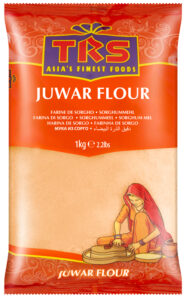

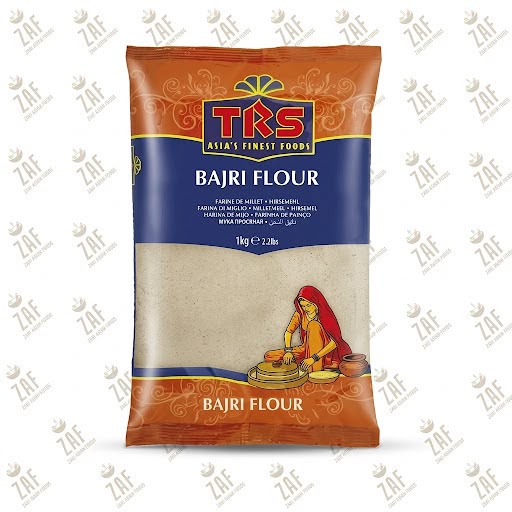
TRS Bajri Flour – Indian Millet Flour
Product Description
Discover the traditional taste of Indian millet cooking with TRS Bajri Flour, a versatile flour commonly used in Indian cuisine. Bajri, also known as Bajra or Pearl Millet, is traditionally used to prepare a variety of delicious dishes, including Indian flatbreads and other regional specialities.
With its distinctive grain flavour and versatile texture, millet flour can be used in both traditional and modern recipes. It is suitable for preparing dishes such as rotis, thepla, khichdi, pancakes, wraps and other homemade creations.
TRS Bajri Flour is a useful ingredient for anyone who enjoys exploring traditional Indian cooking and adding variety to everyday meals.
Product Information
| Product Detail | Information |
|---|---|
| Brand | TRS |
| Product Name | Bajri Flour |
| Product Type | Millet Flour (as described in the product name) |
| Main Ingredient | Ground Rice/Grain (as supplied) |
| Flavour Profile | Characteristic Grain Flavour |
| Net Weight | Please check product packaging |
| Country of Origin | India |
| Importer | Ideal Cash & Carry |
| Importer Address | Bertha-von-Suttner Str. 2, 64560 Riedstadt, Germany |
| Storage | Store in a cool, dry place |
Ingredients
Ground Rice/Grain.
Nutritional Information
Average Nutritional Values per 100g
| Nutrient | Amount |
|---|---|
| Energy | 1638 kJ / 392 kcal |
| Fat | 6.6 g |
| of which Saturated Fatty Acids | 0 g |
| Carbohydrates | 73.3 g |
| of which Sugars | 3.3 g |
| Dietary Fibre | 6.6 g |
| Protein | 10 g |
| Salt | 0 g |
Allergens & Allergy Information
According to the supplied packaging information, the product is handled in an environment that also handles:
- Peanuts and other nuts
- Sesame
- Celery
- Soya
- Mustard
- Sulphites
Allergy Advice: Please check the original package for the exact precautionary allergen wording. Handling in the same facility does not automatically mean that these allergens are ingredients in the product.
Key Features
- Traditional Indian-style flour
- Suitable for a variety of sweet and savoury recipes
- Can be used for rotis, thepla and khichdi
- Versatile ingredient for everyday cooking
- Product of India
How to Use TRS Bajri Flour
TRS Bajri Flour can be used in different traditional and modern recipes, depending on the exact grain composition:
- Bajra Roti: Prepare traditional millet flatbreads and serve with vegetables, dal or curry.
- Thepla: Combine with suitable ingredients and spices to prepare Indian-style flatbreads.
- Khichdi: Use in grain-based savoury preparations.
- Pancakes and Crepes: Experiment with savoury or sweet pancake recipes.
- Wraps and Flatbreads: Use in recipes that work well with millet-based flour.
Preparation Tip: Millet flour generally does not have the same gluten structure as wheat flour. The dough may be more delicate, so add water gradually and handle it carefully. Combining it with other suitable flours can help improve its texture in some recipes.
Storage Instructions
- Store in a cool and dry place.
- Keep away from moisture and direct sunlight.
- After opening, transfer to an airtight container.
- Always use a clean and dry spoon.
Country of Origin & Importer Details
| Detail | Information |
|---|---|
| Country of Origin | India |
| Importer | Ideal Cash & Carry |
| Address | Bertha-von-Suttner Str. 2, 64560 Riedstadt, Germany |
Frequently Asked Questions (FAQs)
1. What is Bajri Flour?
Bajri Flour usually refers to flour made from pearl millet, also known as Bajra. It is traditionally used in Indian cooking.
2. What can I prepare with Bajri Flour?
It can be used for traditional millet rotis, flatbreads, thepla and various other recipes.
3. Does Bajri Flour contain gluten?
Pure pearl millet is naturally gluten-free. However, people following a strict gluten-free diet should check the packaging for cross-contamination warnings and certification.
4. Can Bajri Flour be used for rotis?
Yes. Bajra flour is traditionally used to prepare Indian millet rotis.
5. Where does this product come from?
According to the supplied information, this product originates from India.