
Product Description
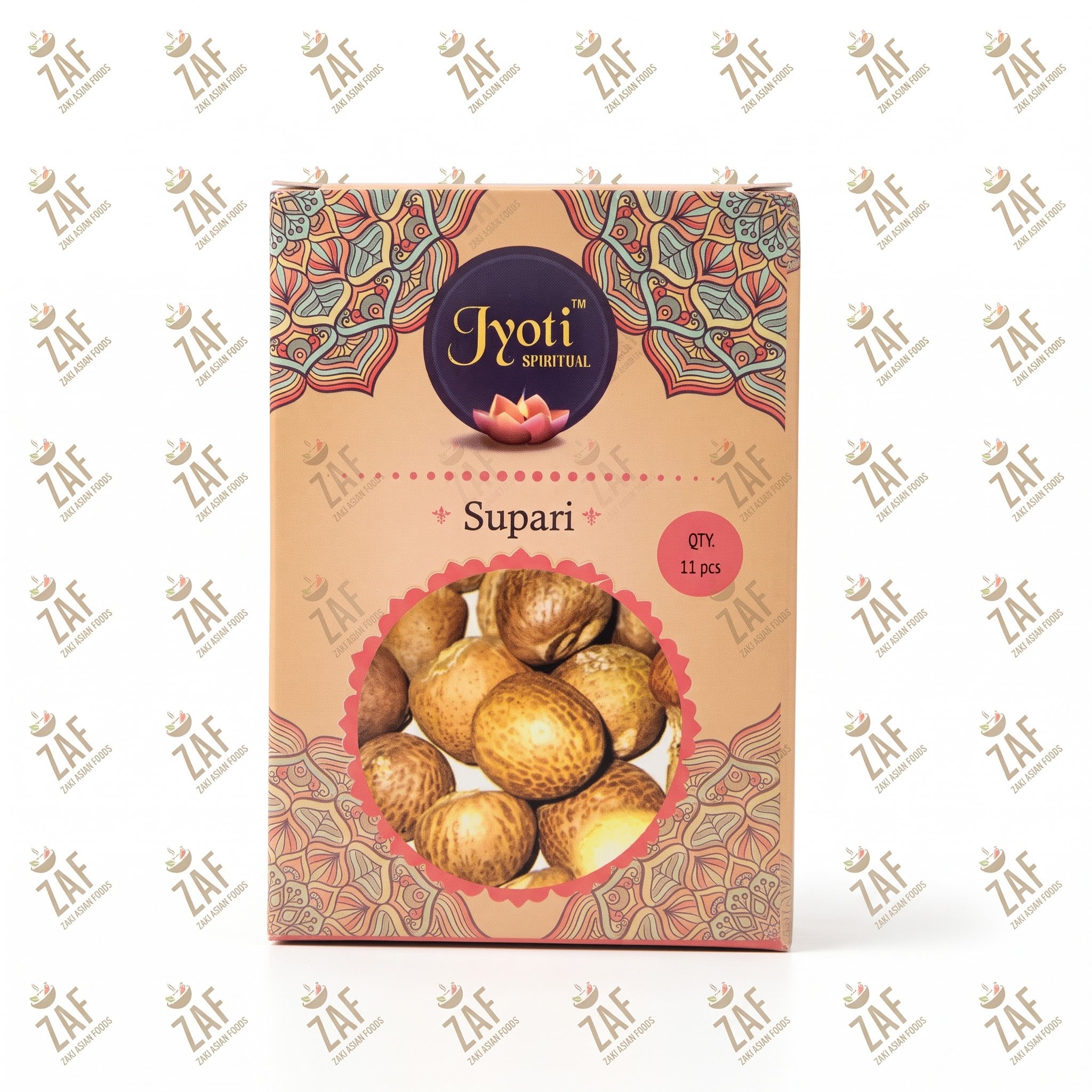
Jyoti Spiritual Supari is a traditional religious offering commonly used in Hindu पूजा (Puja) ceremonies, worship rituals and auspicious occasions. Supari, traditionally known as betel nut or areca nut, holds cultural and religious significance in many Indian traditions.
Supari is commonly included in Puja Samagri and is offered to deities during religious ceremonies as a symbol of devotion, respect and auspiciousness. It is also traditionally used in weddings, festivals, housewarming ceremonies and other important religious occasions.
This convenient pack contains 11 pieces of Supari, making it a useful addition to traditional Hindu worship supplies and home temple arrangements.
Whether preparing for daily prayers, special Puja ceremonies or festive celebrations, Jyoti Spiritual Supari is a traditional item for religious rituals.
Important: This product is labelled for religious purposes only and is not intended for human consumption.
Product Information
| Product Detail | Information |
|---|---|
| Product Name | Supari |
| Brand | Jyoti Spiritual |
| Product Type | Traditional Religious Puja Item |
| Common Name | Betel Nut / Areca Nut |
| Botanical Name | Areca catechu |
| Quantity | 11 Pieces |
| Main Use | Hindu Religious Ceremonies and Puja |
| Traditional Application | Deity Offerings and Puja Rituals |
| Cultural Use | Weddings, Festivals and Auspicious Occasions |
| Country of Origin | Not specified on supplied packaging |
| Packaging | Paper Retail Pack |
| Packaging Information | Recycle Paper, as indicated |
| Consumption Warning | Not for Human Consumption |
| Intended Purpose | Religious Purposes Only |
| Brand Category | Indian Religious and Spiritual Supplies |
What Is Supari?
Supari is commonly known as betel nut or areca nut. It is the seed of the areca palm (Areca catechu), a tropical plant widely found in South and Southeast Asia.
In Indian culture, Supari has an important traditional role in Hindu religious ceremonies. It is frequently included in Puja Samagri and used as an offering during worship.
Supari is traditionally associated with auspiciousness, respect and devotion. It is commonly used alongside other religious items such as turmeric, kumkum, rice, flowers and Chandan powder.
Traditional Uses of Supari in Hindu Rituals
| Traditional Use | Description |
|---|---|
| Hindu Puja | Used as a traditional offering during worship ceremonies. |
| Deity Offerings | Offered to deities as part of certain religious rituals. |
| Wedding Ceremonies | Used in traditional Hindu wedding customs. |
| Housewarming Ceremonies | Included in certain Griha Pravesh rituals. |
| Festival Celebrations | Used during religious festivals and special occasions. |
| Kalash Sthapana | May be placed with other sacred items during certain traditional Kalash rituals. |
| Home Temple | A traditional addition to household Puja Samagri. |
| Religious Gift Sets | Can be included in traditional Puja kits and ceremonial arrangements. |
Cultural and Spiritual Significance
Supari has a long-standing place in Indian religious and cultural traditions.
1. Symbol of Auspiciousness
In various Hindu traditions, Supari is associated with good fortune, auspicious beginnings and positive ceremonial intentions.
2. Symbol of Respect and Devotion
Supari is traditionally offered during worship as a gesture of respect and devotion to deities.
3. Important Puja Ingredient
It is frequently included in traditional Puja arrangements together with flowers, rice, turmeric, Chandan and other sacred offerings.
4. Wedding and Family Ceremonies
Supari is used in several traditional Hindu wedding customs and family celebrations.
5. Traditional Kalash Rituals
In certain Hindu ceremonies, Supari is included as one of the symbolic items associated with Kalash worship.
Benefits and Physical Health Information
Supari has traditional cultural significance, but it is important to distinguish religious uses from health effects.
| Area | Information |
|---|---|
| Religious Significance | Traditionally associated with devotion, auspiciousness and worship. |
| Cultural Importance | Used in traditional Indian ceremonies and celebrations. |
| Traditional Herbal Use | Areca nut has been used in some traditional practices, but this does not establish medical benefits. |
| Nutritional Benefits | No nutritional benefits are claimed for this religious product. |
| Physical Health Benefits | No established health benefits are associated with this particular product. |
Important Health Warning
Although areca nut has a history of traditional use, chewing or consuming it is associated with serious health risks.
The International Agency for Research on Cancer classifies areca nut as carcinogenic to humans. Regular consumption can increase the risk of oral cancer and other serious oral health problems.
For this reason:
- Do not eat or chew this product.
- Do not use it as a food ingredient.
- Do not use it as a medicine or health supplement.
- Keep it strictly for its intended religious purpose.
This product is labelled “Not for Human Consumption” and “For Religious Purpose Only.”
Ingredients and Allergen Information
| Information | Details |
|---|---|
| Product Description | Supari / Betel Nut / Areca Nut |
| Botanical Name | Areca catechu |
| Full Ingredient Declaration | Not provided on supplied packaging |
| Added Ingredients | Not specified |
| Allergens | Not specified |
| Food Suitability | Not suitable for human consumption |
| Intended Use | Religious purposes only |
How to Use Supari for Religious Purposes
- Open the package carefully.
- Select the required quantity for the religious ceremony.
- Include Supari in your traditional Puja arrangement according to your religious customs.
- Use it as an offering during worship where appropriate.
- Store any remaining pieces safely after the ceremony.
Supari can traditionally be arranged with other Puja essentials, including Chandan powder, Abil powder, turmeric, Kumkum, rice and flowers.
Storage Instructions
- Store in a cool and dry place.
- Keep away from moisture and direct sunlight.
- Keep the package properly closed after opening.
- Store away from food and beverages.
- Keep out of reach of children.
- Use only for the intended religious purpose.
Frequently Asked Questions
1. What is Jyoti Spiritual Supari?
It is a traditional religious Puja item made from Supari, commonly known as betel nut or areca nut.
2. How many pieces are included in the package?
Each pack contains 11 pieces.
3. What is Supari used for in Hindu Puja?
Supari is traditionally used as an offering to deities and is included in various Hindu religious ceremonies.
4. Can Supari be used during weddings?
Yes. Supari is traditionally included in certain Hindu wedding rituals and auspicious family ceremonies.
5. Can this Supari be eaten or chewed?
No. The packaging explicitly states that it is not for human consumption and is intended for religious purposes only.
6. What is the botanical name of Supari?
The botanical name of areca nut is Areca catechu.
7. Can Supari be used in Kalash Puja?
Yes. Supari is traditionally included in certain Kalash worship arrangements, depending on the religious custom.
8. What other Puja products can be used with Supari?
Supari can be arranged with traditional Puja items such as Chandan Powder, Abil Powder, Kumkum, turmeric, rice and flowers.