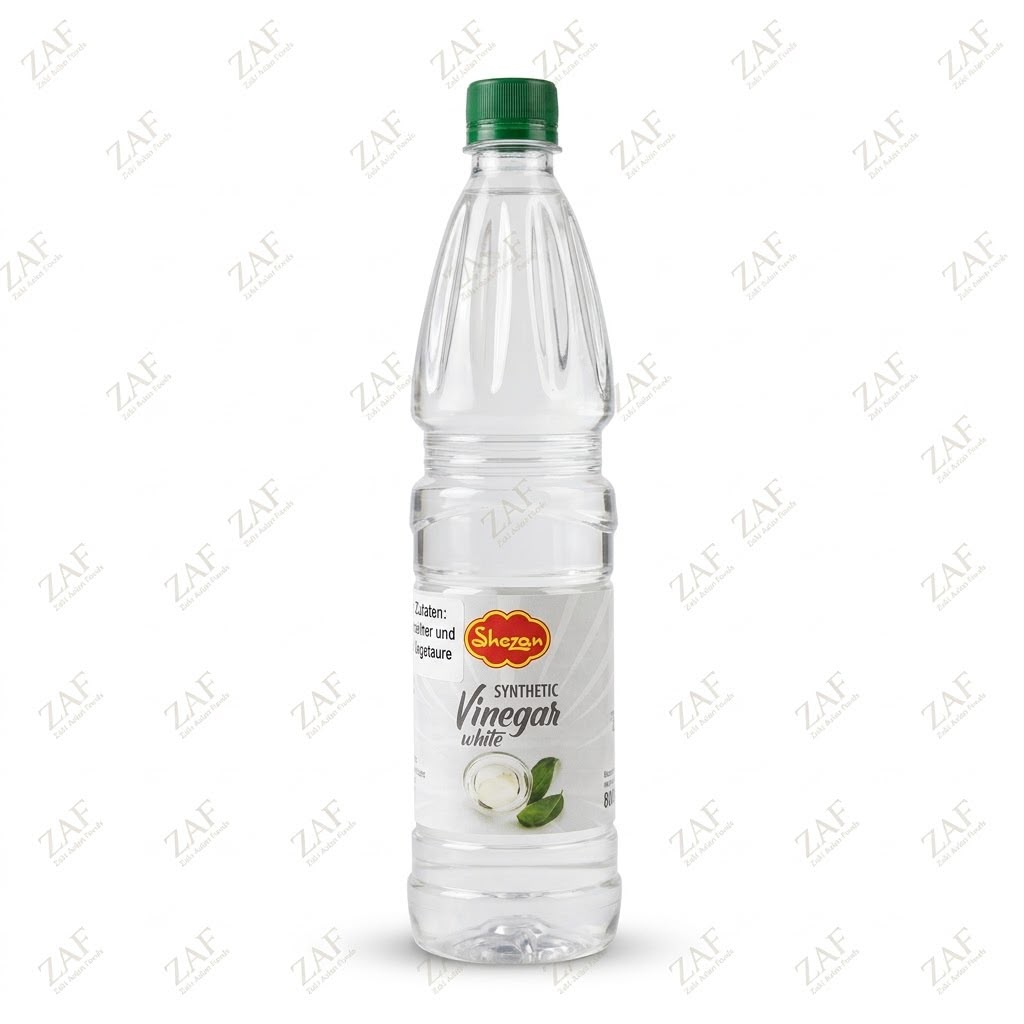
Shezan Synthetic White Vinegar is a versatile kitchen ingredient made from water and acetic acid. It has a clear appearance and a sharp, tangy taste that makes it useful for cooking, pickling, marinades, sauces and everyday food preparation.
This 800ml bottle is produced by Shezan International Limited in Pakistan. Its simple formulation makes it a convenient choice for adding acidity and flavour to a variety of dishes, including salads, chutneys, vegetables and homemade pickles.
White vinegar is widely used in South Asian cooking, particularly for preparing achar (pickles), preserving vegetables and balancing the flavours of spicy foods.
1. Product Information
| Product Detail | Information |
|---|---|
| Brand | Shezan |
| Product Name | Synthetic White Vinegar |
| Product Type | Food-Grade Synthetic Vinegar |
| Net Content | 800ml |
| Appearance | Clear, colourless liquid |
| Main Ingredients | Water and Acetic Acid |
| Taste | Sour, sharp and tangy |
| Country of Origin | Pakistan |
| Manufacturer | Shezan International Limited |
| Manufacturer Address | 56 Bund Road, Lahore, Pakistan |
| Halal Status | Halal – according to packaging |
| Certifications | ISO 9001:2015, ISO 22000:2018 and HACCP stated on packaging |
| Barcode | 8964000051580 |
| Customer Support | feedback@shezan.com |
| Website | www.shezan.com |
2. Ingredients
| Ingredient | Description |
|---|---|
| Water | Base ingredient that dilutes the acetic acid |
| Acetic Acid | Provides vinegar’s characteristic sour taste and acidity |
Ingredients declaration: Water and Acetic Acid.
This is synthetic vinegar, not naturally fermented wine vinegar or apple cider vinegar. It should not be advertised as apple cider vinegar, malt vinegar or naturally fermented vinegar.
3. Nutritional Information
According to the supplied packaging, the serving size is 1 tablespoon (15ml), with approximately 53 servings per bottle.
Nutrition values reproduced from the supplied label. The label appears to report zero values for the listed nutrients.
| Nutritional Information | Per 15ml Serving | Per 100ml |
|---|---|---|
| Calories | 0 kcal | 0 kcal |
| Total Fat | 0g | 0g |
| Saturated Fat | 0g | 0g |
| Trans Fat | 0g | 0g |
| Cholesterol | 0mg | 0mg |
| Sodium | 0mg | 0mg |
| Total Carbohydrates | 0g | 0g |
| Dietary Fibre | 0g | 0g |
| Total Sugars | 0g | 0g |
| Protein | 0g | 0g |
Daily Values are based on a 2,000-calorie diet, as stated on the packaging. Actual nutritional values may vary slightly depending on the product formulation and applicable labelling rules.
4. Uses of Shezan White Vinegar in Cooking
Shezan Synthetic White Vinegar is a useful ingredient in many everyday recipes.
| Common Use | How It Is Used |
|---|---|
| Pickles (Achar) | Adds sourness to homemade vegetable and mixed pickles |
| Salad Dressing | Adds a sharp, refreshing flavour to salad dressings |
| Chutneys and Sauces | Balances spicy, salty and sweet flavours |
| Marinades | Adds acidity to marinades for vegetables, meat and other ingredients |
| Chilli Sauce | Used in homemade chilli sauces and condiments |
| Vegetable Preparation | Adds a tangy flavour to selected vegetable recipes |
| Food Preparation | Helps adjust acidity and flavour in different dishes |
Popular South Asian uses: White vinegar is especially popular in homemade achar, green chilli preparations, onion salads, chutneys and spicy sauces.
5. Benefits and Properties of White Vinegar
White vinegar is valued mainly for its culinary properties. Its main active component, acetic acid, gives it a distinctive sour taste and makes it useful in food preparation.
| Property | Explanation |
|---|---|
| Adds Flavour | Provides a sharp, sour taste to food |
| Helps Balance Flavours | Balances rich, spicy and sweet ingredients |
| Pickling Ingredient | Provides acidity for suitable pickling recipes |
| Low-Calorie Ingredient | The supplied label declares zero calories |
| Sugar-Free According to Label | No sugar is listed in the supplied nutritional information |
| Versatile Kitchen Ingredient | Suitable for a variety of recipes and sauces |
Possible Health-Related Considerations
-
Low in Calories: The supplied nutrition label reports zero calories, making vinegar a low-calorie flavouring ingredient.
-
No Listed Sugar: The label reports zero sugar, so it can add sourness without adding sugar according to the declared nutrition values.
-
Acidity in Food Preparation: Acetic acid provides the acidity needed in many pickling and cooking applications.
-
Food Safety in Pickling: Properly formulated vinegar pickling recipes use acidity to help control the growth of certain harmful microorganisms.
Important health information: Vinegar is not a medicine or a weight-loss treatment. There is insufficient evidence to claim that this particular synthetic vinegar improves digestion, controls diabetes, burns body fat or treats other health conditions. Its main purpose is culinary use.
6. Food Safety and Important Precautions
Although vinegar is a common kitchen ingredient, it contains acetic acid and should be used appropriately.
-
Use as a food ingredient according to your recipe.
-
Avoid drinking concentrated vinegar directly.
-
Do not consume large quantities undiluted, as its acidity can irritate the mouth, throat and digestive tract.
-
Frequent exposure to acidic drinks may contribute to dental enamel erosion.
-
Keep away from eyes and sensitive skin.
-
Keep out of reach of children.
-
Do not mix vinegar with bleach or chlorine-based cleaning products, because dangerous chlorine gas may be released.
Important for pickling: Use a tested recipe with a specified vinegar acidity. The supplied label does not state the acetic acid concentration, so do not assume it has the acidity required for shelf-stable home canning. For long-term preservation, check the bottle’s acidity specification and use an approved recipe.
7. Allergens and Dietary Information
| Dietary Information | Details |
|---|---|
| Declared Ingredients | Water and Acetic Acid |
| Milk | Not listed |
| Gluten | Not listed |
| Nuts | Not listed |
| Soy | Not listed |
| Added Sugar | Not listed |
| Animal Ingredients | None declared |
| Halal | Halal claim printed on packaging |
| Suitable for Vegetarians | Yes, based on the declared ingredients |
| Suitable for Vegans | Yes, based on the declared ingredients |
This information is based on the supplied ingredient declaration. It does not replace a manufacturer’s formal allergen or cross-contamination statement.
8. Storage Instructions
According to the manufacturer, store the bottle at ambient temperature and away from sunlight.
-
Store at normal room temperature.
-
Keep away from direct sunlight.
-
Keep the bottle tightly closed after use.
-
Store in a cool, dry place.
-
Keep away from children.
-
Check the expiry date before use.
Packaging instruction: The manufacturer asks customers to crush the bottle after use. Follow local recycling and waste-disposal requirements.
9. Manufacturer and Quality Information
| Detail | Information |
|---|---|
| Manufacturer | Shezan International Limited |
| Address | 56 Bund Road, Lahore, Pakistan |
| Country of Origin | Pakistan |
| Quality Certification | ISO 9001:2015 |
| Food Safety Certification | ISO 22000:2018 |
| Food Safety System | HACCP |
| Halal | Halal mark printed on packaging |
| Customer Feedback | feedback@shezan.com |
| Official Website | www.shezan.com |
| Barcode | 8964000051580 |
10. Frequently Asked Questions (FAQs)
1. What is Shezan Synthetic White Vinegar?
It is a clear, sour-tasting food ingredient made from water and acetic acid. It is commonly used in cooking, pickling, sauces and salad dressings.
2. Is Shezan White Vinegar suitable for making achar?
Yes. It can be used in homemade achar and other pickling recipes. For long-term preservation, check the vinegar’s stated acidity and follow a tested recipe.
3. Is this apple cider vinegar?
No. It is synthetic white vinegar made from water and acetic acid. It is not apple cider vinegar.
4. Does Shezan White Vinegar contain sugar?
The supplied nutritional label reports 0g of sugar.
5. Does this vinegar contain calories?
The supplied packaging reports 0 calories per 15ml serving.
6. Is Shezan Synthetic Vinegar halal?
The packaging displays a Halal claim.
7. Where is Shezan White Vinegar manufactured?
It is produced by Shezan International Limited, 56 Bund Road, Lahore, Pakistan.
8. Can white vinegar be used in salad dressing?
Yes. It adds a sharp, tangy flavour and can be combined with oil, herbs, spices and other ingredients.
9. Is synthetic vinegar the same as naturally fermented vinegar?
No. Synthetic vinegar is made using acetic acid and water, whereas naturally fermented vinegar is produced through a fermentation process.